
What is PIC?
PIC (Power of Corporate Influence) is a consulting service from the Institute of Oxford Innovation Group that identifies, characterizes and measures interactions between employees, focusing on those that may be relevant to business processes.
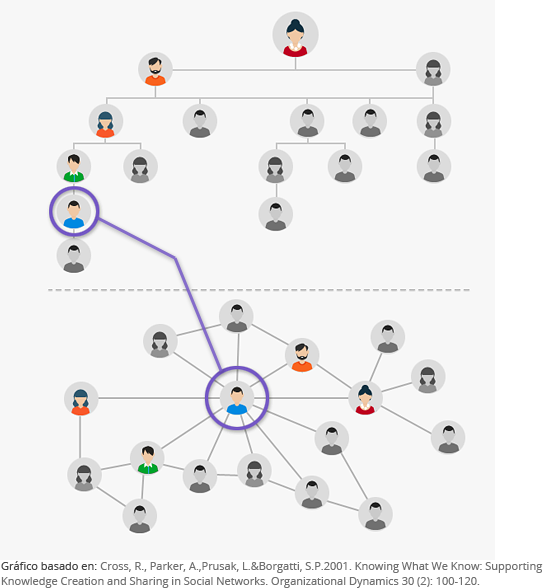
This study applies one of the most advanced approaches in organizational analysis: Social Network Analysis (SNA), which includes concepts and specific analysis methods to extract valuable information from these maps of the organization (detect groups of communication and spontaneous collaboration, identify hidden talent or locate points of improvement in the company).
How does PIC work?
The PIC consulting service is carried out together with the client in order to adapt the project to the context of each company. The phases of the project are the following:
- Definition of objectives and feasibility analysis.
- Inventory and analyze available data sources (including privacy aspects).
- Evaluate the technological requirements of the project.
- Agree on the expected results, access and presentation.
- Questionnaires: The employee reports with whom and how he relates through an online or paper questionnaire.
- Generation and analysis of networks created by interactions between individuals, which are reflected in relationship maps and studied both analytically and visually to draw conclusions that affect the business.
- Preparation and delivery of a consultancy report with the objectives of the study, the results found and recommendations.
- Based on the results of the study, an action plan is designed with the aim of transforming the organization's processes and improving social KPIs.
Benefits
From the PIC point of view it allows:
Improve internal communication
Improve the internal communication of companies and, with it, enhance the corporate culture.
Manage talent
Manage employee talent by identifying the potential influence of profiles.
Detect leaders
Detect hidden experts, leaders and agents of change.
Know the relationship between employees
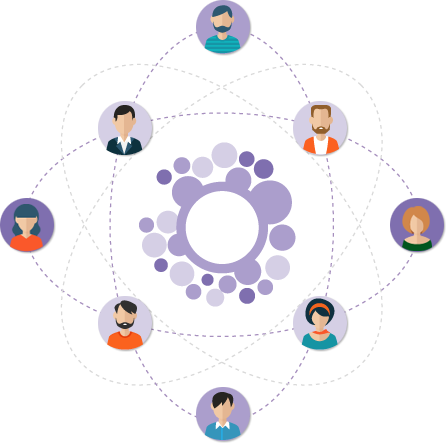
Know the relationship between employees to identify emerging groups, cohesive work teams with common goals.
employee collaboration
Determine which employee characteristics influence collaboration (positive or negative), and the degree of collaboration between them.
At Oxford Innovation Group this study is carried out by expert researchers with a proven track record in Corporate Influence Power, advanced statistical methods, prediction models and communication processes.
Guarantees of effectiveness
- Study depth. PIC consulting allows revealing the true causes of problems in companies and possible improvements in relation to:
- Fragmented communication or communication problems.
Values Fit: Company culture and employee interests should be aligned.
Information silos: knowledge is encapsulated and not disseminated.
Employee engagement: Motivation affects employee initiative and participation.
Access to information and people: communication channels (such as email) may be limiting access to company knowledge. - Analysis rigor. The study data is reflected in graphs and social KPIs that require great computing power, advanced knowledge of databases and their optimization using highly efficient algorithms.
Why invest in PIC?
The information collected in the PIC analysis helps companies to better understand the organization, and make strategic decisions:
- More efficient processes and increased productivity: According to consulting firm McKinsey, the 60% of work is duplicated because employees do not know what other colleagues are doing. PIC improves the management of collaboration processes that have a direct impact on the business
- Cost savings for the HR department. HR.: Leveraging knowledge, reducing brain drain, reducing costs in training leaders, etc.
Engagement: Social recognition of the employee and visibility in the organization. - Personalization: Adaptation of the solution and the service to the needs of the client and the available data sources.
- Evaluation: Understand the work relationships that the network facilitates to evaluate its contribution to business processes and, therefore, to the return on investment.
Solutions implemented so far
PIC consulting has been carried out in leading companies in the banking, insurance, hospital, logistics, food, TV, automotive, sugar mills, technology and government sectors.